

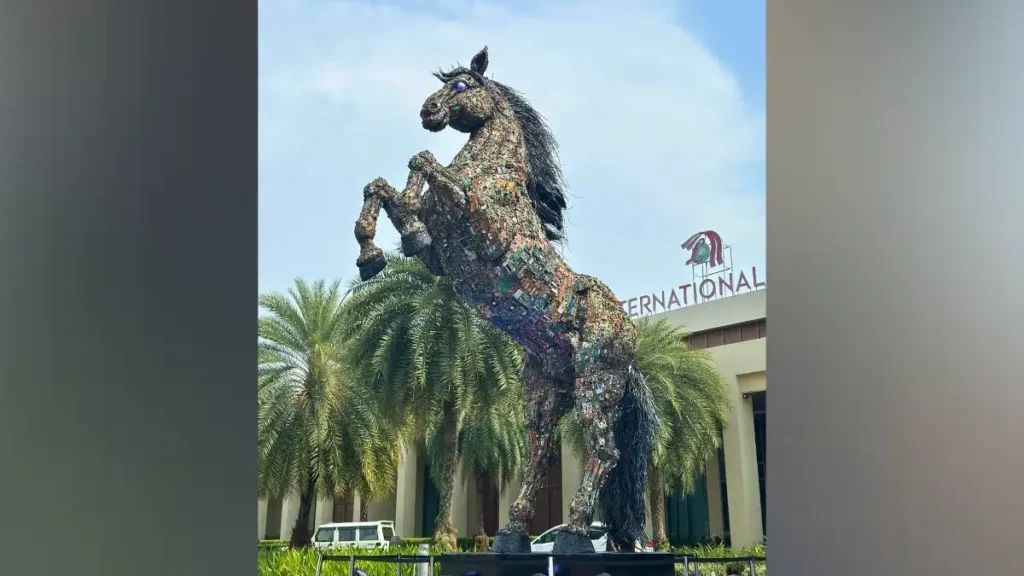
A ‘Cyber Trojan Horse,’ crafted from old circuit boards, chips, wires, and keyboards, has become a major attraction. Know how this unique artwork was created using 700–850 kg of electronic waste.
Kochi: A towering 25-foot artwork crafted from reclaimed electronic scrap has emerged as one of the standout exhibits at Cocon 2026 in Kochi, Kerala. The international gathering serves as a platform for cybersecurity professionals, hacking specialists and technology enthusiasts to explore emerging digital vulnerabilities and the evolving challenges of information security.
Named the Cyber Trojan Horse, the installation brings together art, electronic waste recycling and cybersecurity awareness. Through its striking design, it seeks to help visitors understand how digital deception works and why online threats should not be taken lightly.
The sculpture was created by artist Davinci Suresh using an estimated 700–850 kilograms of electronic scrap. Its overall weight exceeds two tonnes. The installation has been described as India’s tallest cybersecurity-themed artwork made from electronic waste. By linking an ancient tale of deception with present-day cyber risks, it presents a familiar story in a contemporary context.
An Ancient Legend With a Digital Warning
The concept behind the artwork comes from the story of the Trojan Horse, in which Greek soldiers concealed themselves inside a wooden structure resembling a gift. The apparent offering allowed them to enter Troy without revealing their true intentions.
A similar principle can be found in cybersecurity. Trojan malware often disguises itself as legitimate software or an ordinary digital file, encouraging users to open or install it. Once inside a device, it may enable unauthorised access or other malicious activities.
The sculpture translates this technical concern into a visual form that audiences can easily recognise. Rather than explaining cyber threats only through technical terminology, it uses the symbolism of the Trojan Horse to demonstrate how appearances can be misleading.
Suresh has given the horse a dynamic, rearing posture instead of depicting it standing conventionally on all four legs. Its height, unusual construction and elaborate detailing make it stand out while drawing attention to the risks associated with digital deception.
Electronic Waste Turned Into Art
A defining feature of the installation is its use of components salvaged from discarded electronic devices. Circuit boards, computer chips, diodes, electrical wiring and keyboard keys have all been incorporated into the sculpture.
Reports state that keys recovered from approximately 50 discarded keyboards were used to construct the horse’s hooves. Insulated wires and cables form its mane and tail, while blue LED lights installed in its eyes add a distinctive glow, especially in low-light conditions.
Building the sculpture required careful planning because many electronic components are rigid and difficult to arrange around curved surfaces. Large computer motherboards, for example, were not suitable for every part of the horse. The artist therefore sourced smaller circuit boards and electronic parts from televisions and other consumer appliances.
Much of the material was collected from electronic scrap dealers and recycling yards in Pattambi, following searches across several markets. Protective coatings and clear varnish were also applied to help shield the installation from moisture and outdoor exposure.
Also Read :- MPSC Paper Leak Row: CJP Joins Aspirants’ Protest, Gives Government September 24 Deadline
Six Weeks of Work Behind the Installation
The sculpture took around six weeks to build at Suresh’s home studio in Kodungallur. Its supporting framework was constructed using galvanised iron pipes and iron framing, with the core structure measuring approximately 16 feet. A substantial iron base supports the installation, while three layers of shaped fibreglass were added before the electronic components were fitted.
Moving the completed artwork to the conference venue required a separate logistical effort. Because of its considerable height and weight, the sculpture was dismantled into 12 sections to make transportation easier and reduce the possibility of damage.
The sections were carried in four vehicles with assistance from cranes. Once they reached the venue, the different parts were assembled, and the installation was put together within a day.
How Kerala Police Cyberdome Became Involved
The initiative developed through discussions involving Kerala Police Cyberdome, members of the artist community and the organisers of Cocon. Cartoonist Anoop Radhakrishnan helped establish contact between Suresh and the conference organisers.
Ankit Asokan, Superintendent of Police (Cyber Operations), also discussed the concept with the artist and visited his workshop while the sculpture was being developed.
The installation complements the conference’s broader focus on cybersecurity education, digital protection and emerging online threats. The event brings together people interested in hacking, information security and ways to understand and address vulnerabilities in the digital environment.
The main conference programme for Cocon 2026 took place on October 9 and 10, with additional training activities arranged around the event.
Plans for a Possible Permanent Display
The Cyber Trojan Horse was scheduled to remain at the Bolgatty venue during the conference. According to reports, discussions have also taken place with Kochi Corporation authorities about moving the sculpture to Nehru Park in Fort Kochi for permanent public display.
However, the proposed relocation depends on the necessary official approvals. Until a final decision is made, the installation is expected to be moved to a secure storage location after its exhibition.
The installation highlights the value of giving discarded electronics a new purpose while reminding people that cyber risks can often hide behind an appearance of safety. It brings together the ideas of sustainable reuse and greater awareness of digital security. By turning a well-known myth into a large-scale installation, the Cyber Trojan Horse encourages visitors to think more carefully about both electronic waste and online safety.
