

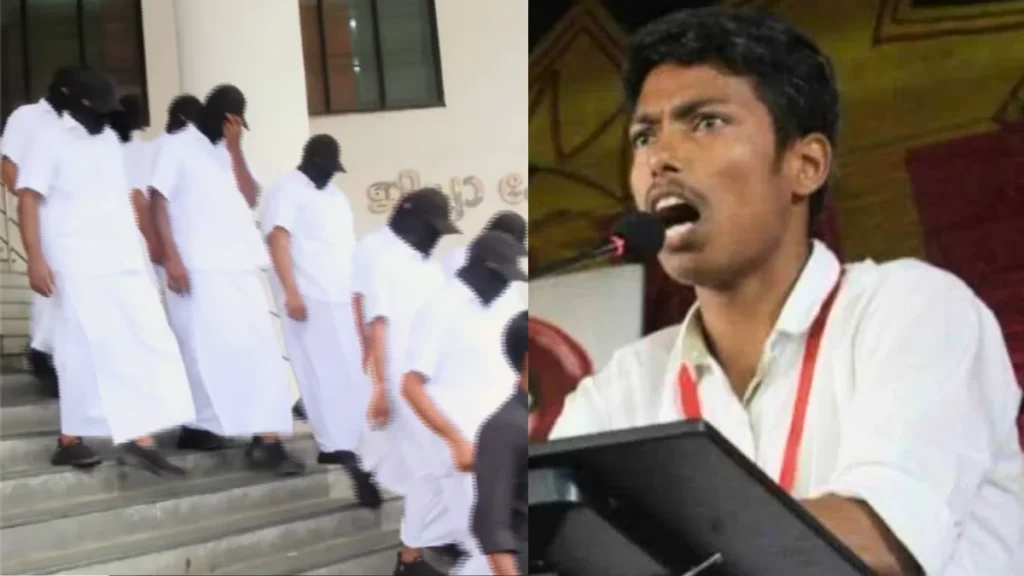
The 2018 killing of Abhimanyu, an SFI student leader at Maharaja’s College in Ernakulam, has reached the trial stage after nearly eight years. Proceedings began with the examination of witnesses against 16 accused.
Kochi: The trial in the 2018 murder of Abhimanyu, an activist of the Students’ Federation of India (SFI) at Maharaja’s College in Ernakulam, commenced on Thursday, October 15, nearly eight years after his death.
The Ernakulam Principal District and Sessions Court began recording witness testimony, bringing the long-pending case into its trial stage. All 16 accused facing trial appeared in court wearing similar clothes and masks, attracting attention during the proceedings.
According to reports, the accused arrived in white dhotis, white half-sleeved shirts and black shoes. Their matching appearance and similar hairstyles reportedly made it difficult to identify them individually. They took off their masks after the judge instructed them to do so.
Who Was Abhimanyu and How Was He Killed?
Abhimanyu belonged to Vattavada in Idukki district and was studying in the second year at Maharaja’s College. He was also associated with the SFI’s Idukki district committee.
He was killed on July 2, 2018, in the early hours of the morning, while preparations were underway for the start of the new academic year. The incident reportedly followed a confrontation linked to campus politics and a dispute over writing on college walls involving SFI activists and members of the Campus Front student organisation.
The prosecution alleges that the attackers reached the college carrying weapons such as knives, wooden rods and punching weapons before assaulting Abhimanyu. He suffered a stab wound to the chest and died at the spot.
Why Did the High Court Allow the Trial to Proceed?
One of the key legal disputes was whether the trial against the 16 accused should be put on hold until the investigation into 10 other accused was completed.
On July 14, 2026, the Kerala High Court dismissed a petition filed by five accused seeking a stay on the proceedings before the Ernakulam Sessions Court. Justice G. Girish rejected the contention that continuing the trial while the remaining investigation was pending would prejudice the case against the 16 accused.
The prosecution has attributed different alleged roles to the two groups. The first 16 accused are alleged to have been involved in the conspiracy and attack, while accused Nos. 17 to 26 are alleged to have provided shelter or helped the principal accused avoid arrest.
The High Court noted that the allegations against the groups were distinct. It held that the pending investigation into the alleged harbouring of the principal accused did not, on its own, provide sufficient grounds to suspend their trial.
In another development reported in October, the High Court rejected requests by accused Nos. 24 and 25, identified as Najeeb and Shanavas, to stop the trial until the investigation into the remaining accused was completed. The court did not accept their plea, enabling the scheduled proceedings to continue.
Also Read :- Keralam Launches India’s First Ecosystem Red List Assessment, to Study Risks Across All 14 Districts
Court Turns Down Plea for In-Camera Trial
The accused had also approached the court seeking an in-camera trial, under which proceedings would take place without general public and media access.
In September, the Ernakulam Principal Sessions Court rejected the request, finding that the concerns raised did not warrant departing from the principle of open court hearings.
13 accused had sought restrictions on public and media access, as well as on photography. They argued that extensive media coverage, public discussion and the presence of Maharaja’s College students near the court could affect the fairness of the trial and potentially influence witnesses.
Witness Examination and Court-Imposed Timeline
The trial is being heard by the Ernakulam Principal District and Sessions Court, where witness examination began on October 15. The development marks a significant step in a case that has remained pending for several years.
According to Onmanorama, the prosecution has listed 156 witnesses. The court’s schedule provides for their examination to be completed within 18 working days, by November 12, 2026.
The timeline follows repeated efforts by the judiciary to avoid further delays. Abhimanyu’s mother had previously approached the Kerala High Court, raising concerns about the time taken by the case and seeking an expedited trial.
In August 2026, the High Court directed the Sessions Court to complete the proceedings within four months. The direction came after earlier attempts to speed up the trial had failed to bring the case to completion within the prescribed periods.
What Lies Ahead in the Abhimanyu Murder Trial?
The prosecution is expected to present witnesses and other evidence to support its allegations against the 16 accused. The defence will be able to question witnesses and challenge the evidence in accordance with criminal procedure.
Meanwhile, the investigation involving the other 10 accused remains a separate matter. The courts have declined to make the completion of that investigation a condition for proceeding with the trial against those already facing charges.
The beginning of witness examination is an important development for Abhimanyu’s family and others following the case after years of delay. However, the start of the trial does not amount to a finding of guilt. The prosecution’s allegations must be tested through evidence, and the accused retain the right to a fair trial.
