

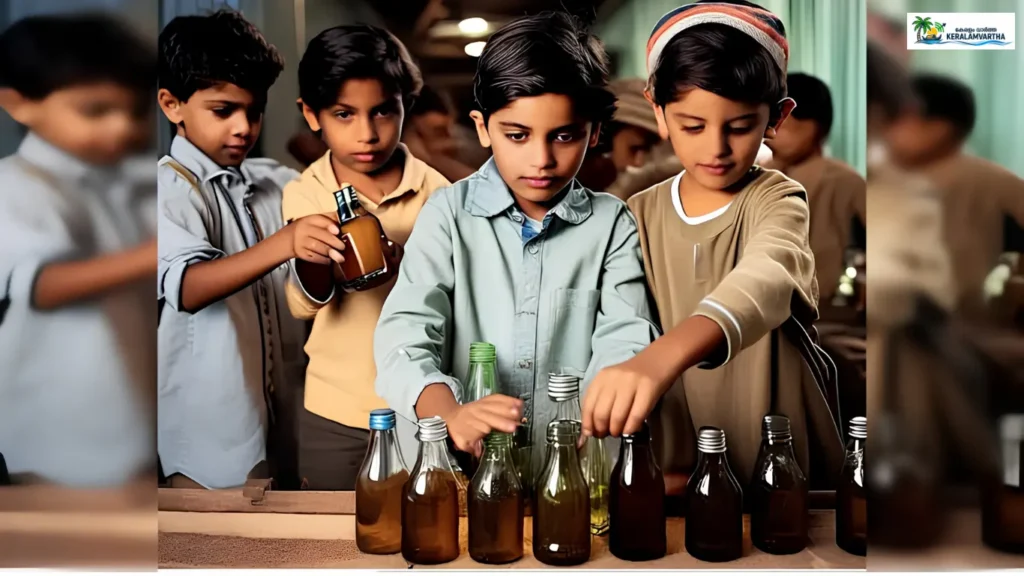
KOCHI: A case involving three minors allegedly being served toddy at a shop near North Paravur has raised questions far beyond one outlet in Kochi. Two of the three youngsters were 16-year-old girls, and one of them fell seriously ill while returning home after drinking toddy, according to police. Police have registered a case against the toddy shop licensee and an employee. No arrests have been reported so far.
The incident raises a difficult question about how young people access alcohol in a state where authorities tightly regulate liquor sales and where alcohol policy remains politically sensitive. If age restrictions and licensing rules are in place, how did three minors manage to drink at a licensed toddy shop?
According to police, the three minors visited the toddy shop in the Cheraipadam area of North Paravur on Saturday. They allegedly drank toddy before leaving the shop and boarding a bus. During the journey, one of the girls began vomiting and grew increasingly weak. After getting off the bus in the Munambam area, she reportedly collapsed by the roadside.
Munambam police reached the spot, contacted her relatives and arranged medical care. The three youngsters later remained in stable condition. After the family filed a complaint, police registered a case against the shop licensee and an employee. Investigators are now examining how the minors entered the premises, how the staff served them alcohol and whether the employees knew their ages.
Kerala’s Youth Alcohol Question Goes Beyond One Toddy Shop
The North Paravur case also brings an older public-health question back into focus: how much exposure to alcohol do Kerala’s adolescents face?
A study of 7,560 school students aged 12 to 19 in Ernakulam found that 15% reported consuming alcohol at some point in their lives. The figure reached 23.2% among boys and 6.5% among girls. Researchers also recorded the average age of alcohol initiation at 13.6 years. The study appeared in 2016, so it cannot serve as a measure of current alcohol use among Kerala’s teenagers. However, it documents that adolescent alcohol exposure has concerned researchers in the state for years.
Another analysis from the same research project found that 44.5% of adolescents reported harm linked to other people’s drinking, including psychological, physical and financial harm. The researchers associated such exposure with a greater likelihood of substance use and psychological distress. The findings do not prove that minors currently obtain alcohol through retail outlets, but they add important context to the wider youth-exposure debate.
The question becomes even more significant when viewed alongside Kerala’s enormous alcohol market. Kerala State Beverages Corporation figures show that sales of IMFL, beer, wine and other categories reached ₹21,130.78 crore in 2025-26, up from ₹19,732.82 crore in 2024-25. The corporation reported a revenue contribution of ₹18,675.71 crore during 2025-26.
₹21,000 Crore Market, Strict Rules — Where Does the System Break?
These numbers highlight a broader policy tension. Kerala treats alcohol as both a public-health concern and a major source of state revenue. At the same time, policymakers continue to debate bar licences, operating hours and the availability of alcoholic beverages.
In February 2026, the government extended permitted bar operating hours until midnight. Bar licence renewals have also remained a politically sensitive issue, particularly as the state continues to debate its wider liquor policy.
The debate has also moved towards low-alcohol beverages. The 2026 Budget proposed separate tax treatment for certain beverages containing between 0.5% and 20% alcohol. The Excise Minister later said authorities would decide on their sale under the state’s new liquor policy.
Against this backdrop, the North Paravur case raises a question much larger than the incident itself: when Kerala has licensing systems and age restrictions for alcohol, where does the system fail when minors gain access to it?
The answer could involve enforcement at the retail level, inadequate age checks, gaps in the law or wider social access to alcohol. This single case cannot establish a statewide trend in underage drinking. But it does put a small incident under a much larger spotlight, and asks Kerala’s alcohol policy debate to confront a basic question: who do the rules actually protect, and how effectively?
