

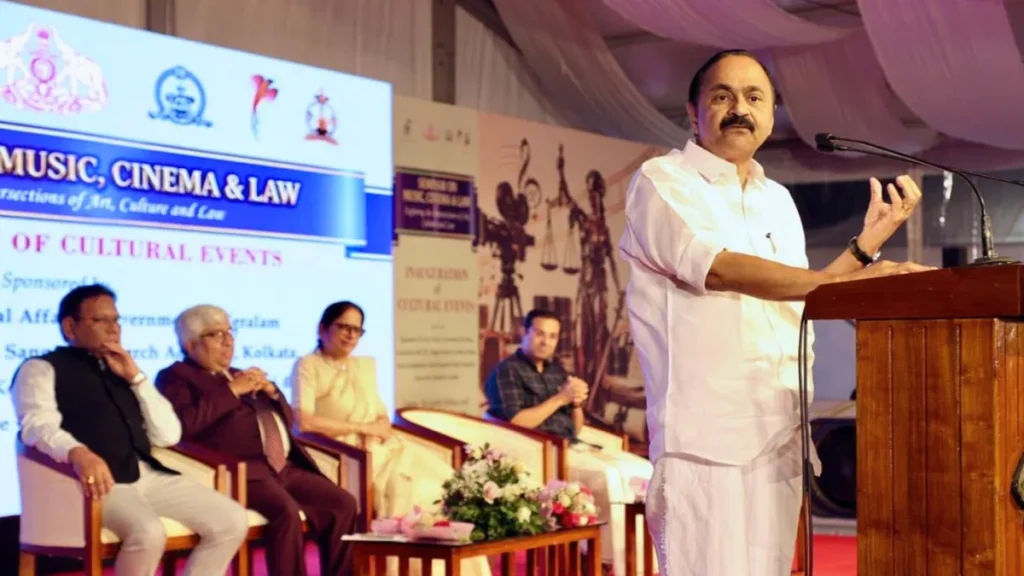
Film piracy and AI deepfakes are creating new legal challenges for creators. Keralam CM V.D. Satheesan has called for stronger copyright laws to protect artists and the film industry.
Kochi: Keralam Chief Minister V.D. Satheesan has called for a stronger legal framework to protect the film and creative industries from piracy and emerging risks linked to artificial intelligence (AI). He stressed that filmmaking requires significant financial investment and the collective work of artists, technicians and other professionals, making stronger copyright protection essential for the sector.
Satheesan made the remarks on Friday, September 11, while inaugurating the seminar ‘Music, Cinema and Law: Exploring the Intersections of Art, Culture and Law’ in Kochi. The event is being jointly conducted by the Kerala Judicial Academy and the National University of Advanced Legal Studies (NUALS).
The three-day seminar, which will run until September 13, is focusing on a range of legal and technological issues involving cinema, music, copyright, artificial intelligence, digital platforms and the rights of creators.
Satheesan Calls for Stronger Protection Against Film Piracy
Highlighting the economic and creative scale of film production, Satheesan said a movie is the result of the combined efforts of a large number of people and involves considerable financial resources.
Unauthorised distribution of films can therefore affect not just producers but also artists, technicians and other stakeholders associated with the industry. The Chief Minister argued that existing copyright provisions should be reviewed and amended wherever necessary to provide more effective protection against piracy.
The rapid expansion of digital platforms has made the unauthorised sharing of films, songs and videos easier. Content can now be copied and distributed to large audiences within a short period, creating new challenges for copyright enforcement.
Against this backdrop, Satheesan stressed the need for laws and enforcement systems to keep pace with technological changes.
AI and Deepfakes Raise Fresh Legal Concerns
The discussion at the seminar also moved beyond conventional forms of piracy, with increasing use of artificial intelligence creating a new set of legal concerns.
AI tools can now be used to generate or manipulate photographs, videos, music and other forms of content. While the technology has opened up new creative possibilities, it has also increased the risk of misuse.
Satheesan particularly highlighted the problem of AI-generated fake images and videos involving well-known personalities. Such manipulated content can spread rapidly through social media and potentially damage an individual’s reputation, identity and public image.
The growing availability of AI-generated content has also raised questions about the use of a person’s face, voice and identity without consent. Legal systems will increasingly have to determine how such misuse should be addressed and who should be held responsible.
Why Existing Copyright Rules Face New Challenges
The rapid development of AI and digital technology has made copyright-related questions more complicated. Content can be created, altered, reproduced and distributed using tools that were not available when many existing legal provisions were framed.
For artists, filmmakers, musicians and other creators, protecting original work from unauthorised use has become increasingly important. At the same time, they need effective legal remedies when their work is copied or distributed through online platforms without permission.
The seminar is examining these emerging questions, including the relationship between copyright law, AI-generated content and digital platforms.
Kerala High Court Chief Justice Highlights Link Between Law and Art
Kerala High Court Chief Justice Justice Soumen Sen also addressed the gathering and spoke about the close relationship between law, cinema and music.
He observed that although law, music and cinema may appear to belong to different areas, all three are closely connected with human experiences and emotions.
According to Justice Sen, art reflects different aspects of human life, while law provides a framework for protecting rights and regulating activities associated with those creative expressions.
He also underlined the wider cultural significance of music. Music, he said, can preserve the memories, language, identity and experiences of a society.
In times of conflict and social tension, music can also provide people with emotional relief, highlighting its role beyond entertainment.
Also Read :- Bihar Leads India in Internet Data Consumption as YouTube, Instagram Drive Usage
Copyright Protection in the Digital Era
The seminar is also examining how the growth of digital platforms has changed the way creative content is produced, distributed and consumed.
For creators, online platforms offer access to much larger audiences but also create new possibilities for unauthorised reproduction and distribution. A film, song or video can be copied and circulated across multiple platforms in a short period.
This has increased the importance of effective copyright enforcement and accessible legal remedies for creators whose work is used without authorisation.
The emergence of AI adds another layer to the issue, particularly when technology is used to modify existing creative works or reproduce aspects of an individual’s identity.
Satheesan Emphasises Need to Protect Artists
Apart from legal and technological challenges, Satheesan also spoke about the broader importance of art and artists.
He said creative expression can provide people with moments of happiness and allow them to temporarily move away from the difficulties and pressures of everyday life.
For this reason, protecting artists and the creative works produced by them is important not only from an economic perspective but also from a social and cultural point of view.
The protection of creative industries, therefore, involves safeguarding both the financial interests of those involved in production and the artistic contributions that shape society’s cultural life.
Senior Dignitaries Attend Kochi Seminar
Supreme Court Justice V. Mohan attended the programme as the chief guest. Kerala Higher Education Minister R. Bindu was also present at the event.
The seminar brings together discussions around law, cinema, music and emerging technologies at a time when the creative sector is undergoing rapid digital transformation.
The central concern emerging from the discussions is that legal frameworks must evolve alongside technology. While traditional challenges such as film piracy continue to affect the creative industry, technologies such as AI are creating new questions around deepfakes, identity misuse and unauthorised digital content.
Satheesan’s call for changes in copyright law comes against this changing technological backdrop, with the emphasis on creating stronger safeguards for films, music, artists and other creative works while addressing new forms of digital misuse.
