

Student organisation files formal complaint with district police chief seeking identification of accused, blocking of accounts and complete removal of images from the internet
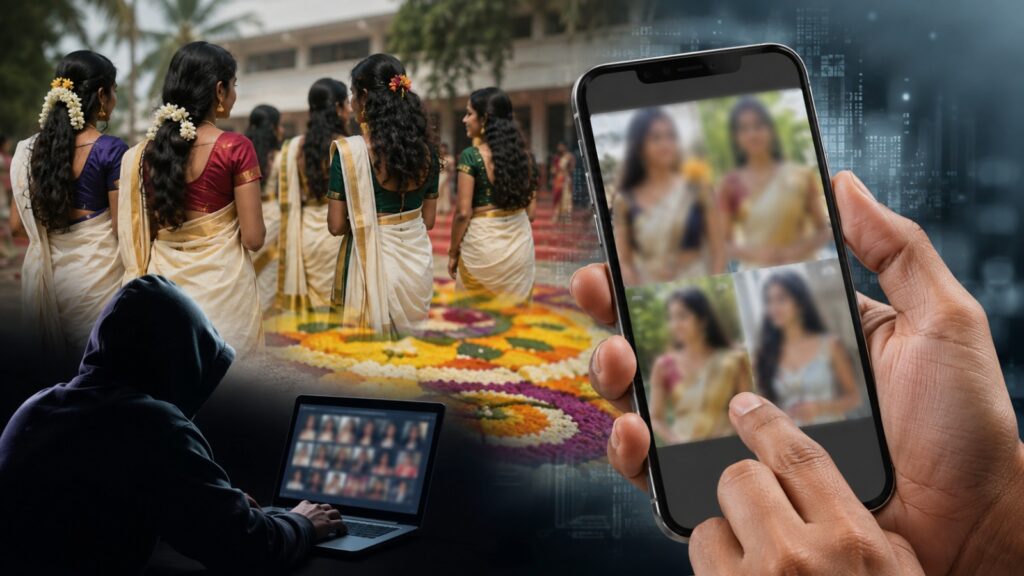
KOZHIKODE/MALAPPURAM: People have digitally altered photographs of female college students in Kerala’s Malappuram district and turned them into obscene images. Some of these photographs reportedly came from Onam celebrations on college campuses. People have also circulated the morphed images on social media. Student organisations have filed complaints and asked the police to investigate the matter immediately.
The Muslim Students Federation (MSF) and other student groups approached the district police chief and demanded action against those behind the images. They asked the police to identify the people responsible, block the accounts spreading the content and remove the images from the internet.
MSF general secretary Jaseel Paramban said in the complaint that such acts violate the dignity and identity of women students and cause severe mental distress. He also demanded that the authorities take legal action against those responsible without delay.
Sources said the district police chief has directed the concerned deputy superintendents of police to start an immediate investigation and take strict action. The police have also sought help from cybercrime officials to track the people and online groups spreading the images.
Student Groups Demand Quick Action After Images Surface
The complaints point to a growing problem in the region. People take ordinary photographs of young women from Instagram profiles, stories and public college events and use digital tools to create obscene versions. They then circulate or sell these images online.
Police have not revealed the exact details of the latest images because they want to protect the privacy of the students involved. However, student organisations said the victims are college students whose everyday and festive photographs have become targets of digital abuse.
Kerala colleges regularly organise Onam celebrations where students wear traditional clothes and take part in dances, pookkalam competitions and other cultural programmes. Students and their friends often share photographs and videos from these events on social media.
People can easily download these photographs and use AI-assisted software or other digital tools to alter them. They can then share the fake images without the permission of the people shown in them. Previous cases in Kerala have also shown how people have misused photographs taken during Onam celebrations.
The MSF complaint has also received support from other student organisations. Their demand for accountability reflects growing concern over the safety of young women in educational institutions, who can become targets of image-based sexual abuse.
Digital Exploitation of Young Women Follows a Pattern Across North Kerala
The latest incident follows a wider pattern reported in north Kerala districts such as Malappuram, Kozhikode, Kannur and Wayanad. Police in these districts have investigated cases involving people who morph and trade women’s photographs through secret online groups, including Telegram groups.
Earlier in 2026, a woman from Kozhikode complained that someone had morphed her Instagram photographs and circulated them online. Parappanangadi police in Malappuram registered a case against a Kozhikode native who allegedly sold the altered images to several groups. The investigation later found that people were also selling morphed content for money through closed online channels.
Police have made other arrests in similar cases. In one case, police arrested a 25-year-old man from Vallikkunnu in Malappuram. Investigators accused him of taking photographs from Instagram, creating obscene versions and selling them. Police found that he had used several phone numbers and Telegram groups over a long period.
In another blackmail case, police arrested three young men from the district. The accused allegedly threatened a female student with the circulation of morphed nude images and demanded a large amount of money from her.
A February 2026 case involving engineering college students also showed how the problem has reached college campuses. Police arrested junior students after they allegedly morphed photographs of senior female students. The students had taken the original photographs during Onam celebrations at their college. The accused then allegedly circulated the altered images. Police also seized phones and laptops during the investigation.
These cases show that the problem is not new and does not affect just one area. People can take photographs from public or semi-public sources, including selfies, college events and festivals, and turn them into harmful content. Some people use the images to make money, while others use them to harass or blackmail victims.
How Festival and College Photos Become Tools of Harassment
Onam celebrations create a large amount of visual content across Kerala. Students wear traditional clothes, take group photographs and participate in cultural programmes. In recent years, videos of hijab-clad students dancing at Onam events in Malappuram have also gone viral online and attracted attention for showing cultural participation.
However, the same public sharing of photographs also gives offenders access to a large collection of identifiable images.
Once someone downloads a photograph, they can use easily available photo-morphing and deepfake-related tools to alter it. These tools require little technical knowledge. Offenders can post the fake images on public platforms or share them through private Telegram and other encrypted groups, where police may find it harder to track them.
Victims often discover the fake images only after someone forwards the content to them or a friend informs them about it.
The emotional impact can be serious. Victims may experience extreme stress and fear that the images will spread further. Some may avoid college, social events or public spaces. Others may suffer long-term anxiety about their digital identity and online presence.
Families can also face social pressure because of such incidents. Students who are preparing for jobs or higher education may fear that fake images could affect their careers, even when the images are clearly manipulated.
Police Face Several Challenges in AI-Based Image Morphing Cases
Indian law gives authorities several options to act against people who create and circulate such content. The Information Technology Act includes provisions dealing with obscene material published or transmitted electronically, identity theft and privacy violations.
Other criminal law provisions can also apply in cases involving offences against women, defamation and criminal intimidation. The Bharatiya Nyaya Sanhita and newer cybercrime measures have also strengthened some legal tools available to investigators.
However, police face several challenges while investigating these cases.
Offenders often use anonymous or temporary accounts. They may operate private and invite-only Telegram groups. Police sometimes need to coordinate across districts or even states because offenders can spread the content quickly.
AI tools have also made image manipulation faster, cheaper and easier than traditional photo-editing methods. At the same time, some victims hesitate to file complaints because they fear social stigma, embarrassment or further trauma during the investigation.
Police have arrested suspects, seized electronic devices and examined phones and social media accounts in several individual cases. Authorities have also carried out joint investigations involving Malappuram, Kozhikode, Kannur and Wayanad when they identify links between cases.
However, the large amount of online content and the speed at which people can share it continue to create major challenges for law enforcement agencies.
Student Groups Seek Stronger Protection for Victims
Student organisations want authorities to take steps beyond individual arrests. They have called for faster systems to remove harmful content from social media platforms, stronger cybercrime units with enough staff and technical resources, and digital privacy awareness programmes in colleges.
They also want colleges to create confidential and simple systems through which students can report such incidents without facing additional trauma.
Colleges can also take preventive steps. Institutions regularly organise Onam and other cultural events that generate large amounts of photographs and videos. Colleges can create clear rules about photography and sharing group photographs. They can also establish quick-response systems for cases involving misuse of students’ images.
Digital literacy programmes can further help students protect themselves. Colleges can teach students how to strengthen privacy settings on Instagram and other social media platforms, limit access to personal photographs, use watermarks where appropriate and identify suspicious messages or phishing attempts.
Women’s groups and civil society organisations have repeatedly said that image-based sexual abuse represents a form of gender-based violence. They have called for authorities to treat such offences as seriously as other forms of abuse.
The repeated cases in Kerala, despite the state’s high levels of education and digital awareness, show that greater access to technology does not automatically create safer online spaces.
What Happens Next and How Students Can Stay Safe
Police have directed the Malappuram district authorities to investigate the current complaints thoroughly. Cyber police are expected to identify the accounts involved, trace the source of the morphed images where possible and seek the removal of the content from online platforms.
Affected students may also file additional complaints, which could lead to more FIRs.
Students and young women can take several practical steps to protect themselves. They can regularly review their privacy settings on social media accounts and limit the visibility of personal photographs. They can also think carefully before accepting follow requests from unknown accounts and keep records of any harassment or suspicious activity in case they need to file a complaint.
Victims can report such incidents to local cybercrime units and through national cybercrime reporting systems. However, the complaint and investigation process can sometimes take time.
Social media platforms such as Instagram, Telegram and others are also facing increasing pressure to detect and remove non-consensual intimate images more quickly. Authorities are paying greater attention to deepfakes and image-morphing technology at the national level.
However, effective action on the ground still depends heavily on the resources available to local police and their ability to coordinate with other agencies.
The Malappuram complaints highlight a much larger problem involving the digital violation of women’s dignity. Photographs that students take during festivals and college celebrations should remain memories of happy occasions. Instead, some offenders have turned them into tools of harassment and distress.
Student organisations have now taken the issue to the authorities and demanded accountability. The police response, the speed at which platforms remove the fake content and the willingness of colleges and technology companies to strengthen preventive measures will determine whether such incidents continue or whether this case becomes a turning point in improving online safety for young women in Kerala’s colleges.
